
Building for the Future: Marta Schantz (Director, Sustainability) Discusses How Multifamily Leaders See Sustainability as Strategy
Marta Schantz, Director of Sustainability, is focused on embodied carbon, water efficiency, waste efficiency, physical climate risk, resident engagement, and sustainability reporting at AvalonBay Communities.

Director of Sustainability
We’re seeing unprecedented momentum in the multifamily industry when it comes to sustainability . Sustainability has evolved from a nice-to-have initiative to a differentiating business strategy. What was once framed as “doing the right thing” is now integral to long-term risk management, asset performance, and brand value. In the latest episode of Commercial Property Executive’s Sustainability Street podcast, I had the opportunity to discuss what this progress means for multifamily owners and operators — and how AvalonBay is approaching the challenge with both urgency and pragmatism.
The Shift: From Commitments to ExecutionAcross the real estate landscape, we’ve seen ambitious sustainability goals proliferate over the past few years — net-zero targets, embodied carbon pledges, electrification roadmaps. We have our own 1.5°C-aligned emissions reduction targets at AvalonBay. And we’re now in the era of execution. Stakeholders are asking harder questions: How will these targets be achieved? What is the capital impact? How does this align with risk, regulation, and resilience? What specific examples do you have of putting these commitments into practice?
For multifamily developers and owners, the opportunity and challenge lie in operationalizing decarbonization at scale. With our sector specifically, our assets are lived in, not just leased; decisions affect thousands of residents daily. That means sustainability efforts not only deliver measurable carbon reductions and drive financial value to the company; they also improve resident quality of living with better indoor comfort, improved air quality and lower utility bills.
At AvalonBay, our focus is on integration rather than isolation, weaving sustainability considerations into developments, construction, investment decisions, procurement, design standards, and long-term operations. That’s where the real leverage lies.
Solar and Electrification: The Next Frontiers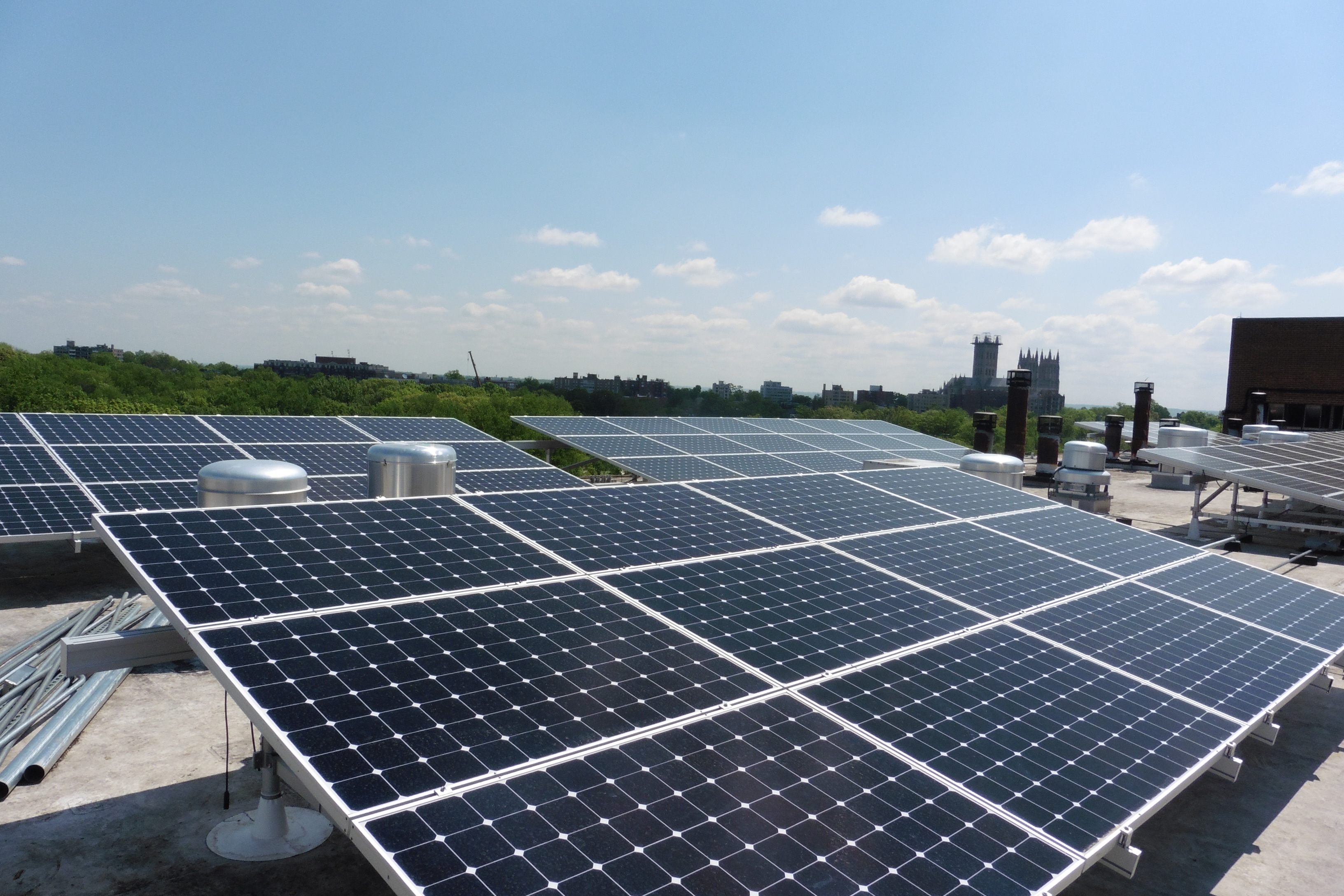
Take solar deployment, for example. The technology is proven, but the path to scale isn’t simple. Site constraints, local incentives, and financial returns vary widely across communities and regions. To make solar a meaningful contributor to both our decarbonization goals and our bottom line, it has to move from pilot to portfolio strategy, representing a default component of how we develop and operate communities, not a one-off feature. This is where AvalonBay has landed on its many-year solar journey: we now evaluate every development and prospective investment for solar feasibility, and have expanded our analysis to include resident solar in addition to common-area solar.
Building Electrification is another major frontier. Converting buildings to all-electric systems is important to reduce on-site emissions, but it introduces new questions about technology performance, resident utility costs, and electric grid capacity. Forward-looking developers are engaging with utilities, regulators, manufacturers, and architects early to design holistic solutions that work at scale. We’re also realistic – if it doesn’t pencil financially to develop an all-electric building from the start, we electrify what we can and future-proof the community by planning for phased electrification of remaining gas-powered building systems over time.
Regulation and Investor Pressure Are Accelerating ChangeOne reason for this acceleration is the changing external landscape. More cities and states are setting carbon regulations that drive building performance and corporate transparency. Investors are embedding environmental performance metrics into decision-making. Residents increasingly expect healthy, sustainable, and resilient features in their apartment homes.
These forces are converging to make sustainability table stakes - an economic necessity rather than a discretionary investment. Leading owners recognize that proactive sustainability planning isn’t just about complying with mandates; it’s about staying competitive. Buildings that underperform on energy or emissions will face growing financial headwinds: compliance costs, insurance risks, valuation pressure, utility bills, and reduced resident appeal.
The Business Case for SustainabilityThe good news is that the business case has never been stronger. Sustainability initiatives increasingly deliver tangible returns: lower utility costs, higher asset resilience, improved reputation, and enhanced access to capital.
AvalonBay’s vertically integrated business structure allows us to incorporate asset-level sustainability considerations across the development, construction, acquisition, operation, and disposition phases of a community’s life cycle. As I said on the podcast, it’s not about chasing “the next shiny thing” — it’s about setting up durable systems that balance climate impact with operational performance. Whether it’s installing solar arrays, piloting electric heat pumps, or tightening data quality, the objective is the same: create value while reducing environmental impact.
Collaboration as a Competitive AdvantageSustainability success in real estate isn’t achieved in isolation. It requires collaboration internally and externally — between owners and utilities, between designers and operators, and across the broader ecosystem of suppliers, investors, and policymakers.
One theme that came up in the podcast was the growing importance of cross-sector dialogue. The real estate industry can’t solve the decarbonization challenge alone. We need continued coordination with regulators to create consistent policies and realistic timelines; with residents to encourage behavioral change for energy and water efficiency; with utilities to address grid capacity and greening concerns; and with peers to share data and lessons learned.
Looking AheadThe multifamily industry has more than accepted the importance of sustainability to business success, we have embraced it. The question is no longer if we act, but how fast and how strategically we move. The next decade will define which portfolios are assessing and managing climate risks and opportunities, and which are left scrambling to catch up under pressure.
At AvalonBay, we’re focused on building sustainability into every decision — not as a compliance exercise, but as a driver of innovation, risk reduction, and community value.
As I shared on Sustainability Street, the work isn’t always glamorous. It’s policy analysis, data refinement, capital planning, and system upgrades. But that’s where impact happens. The path to decarbonization isn’t a straight line but rather a disciplined series of choices that make our portfolio stronger, our communities more resilient, and our industry more sustainable.
If there’s one takeaway for multifamily leaders, it’s this: sustainability is no longer an initiative to manage; it’s a strategy to lead.
MEDIA INQUIRIES

Tara Vales
4040 Wilson Blvd. Suite 1000
Arlington, VA 22203
T: (703) 329-6300
media_relations@avalonbay.com
4040 Wilson Blvd. Suite 1000
Arlington, VA 22203
T: (703) 329-6300
media_relations@avalonbay.com
Some of the materials above have been published by third parties and their content has not been confirmed by AvalonBay. The materials in this Newsroom have been made available for informational purposes only and do not constitute an offer to sell, or a solicitation of an offer to buy, securities. No part of the Newsroom materials shall form the basis of, or be relied on in connection with, any contract or investment decision under any circumstance for any purpose. The materials in this Newsroom may include forward-looking statements. Forward-looking statements, by their very nature, are subject to inherent risks and uncertainties are based on several assumptions, both general and specific, which give rise to the possibility that actual results or events could differ materially from expectations expressed in or implied by such forward-looking statements. These statements are not guarantees of future performance or events and AvalonBay cautions you against relying on any of these forward-looking statements. Please refer to the materials filed publicly by AvalonBay Communities, Inc. with the SEC, including its most recent Forms 10-K and 10-Q, for additional information about AvalonBay and about the risks and uncertainties related to its business, which may affect the statements made on this website.